A powerful call to attract ducks realistically
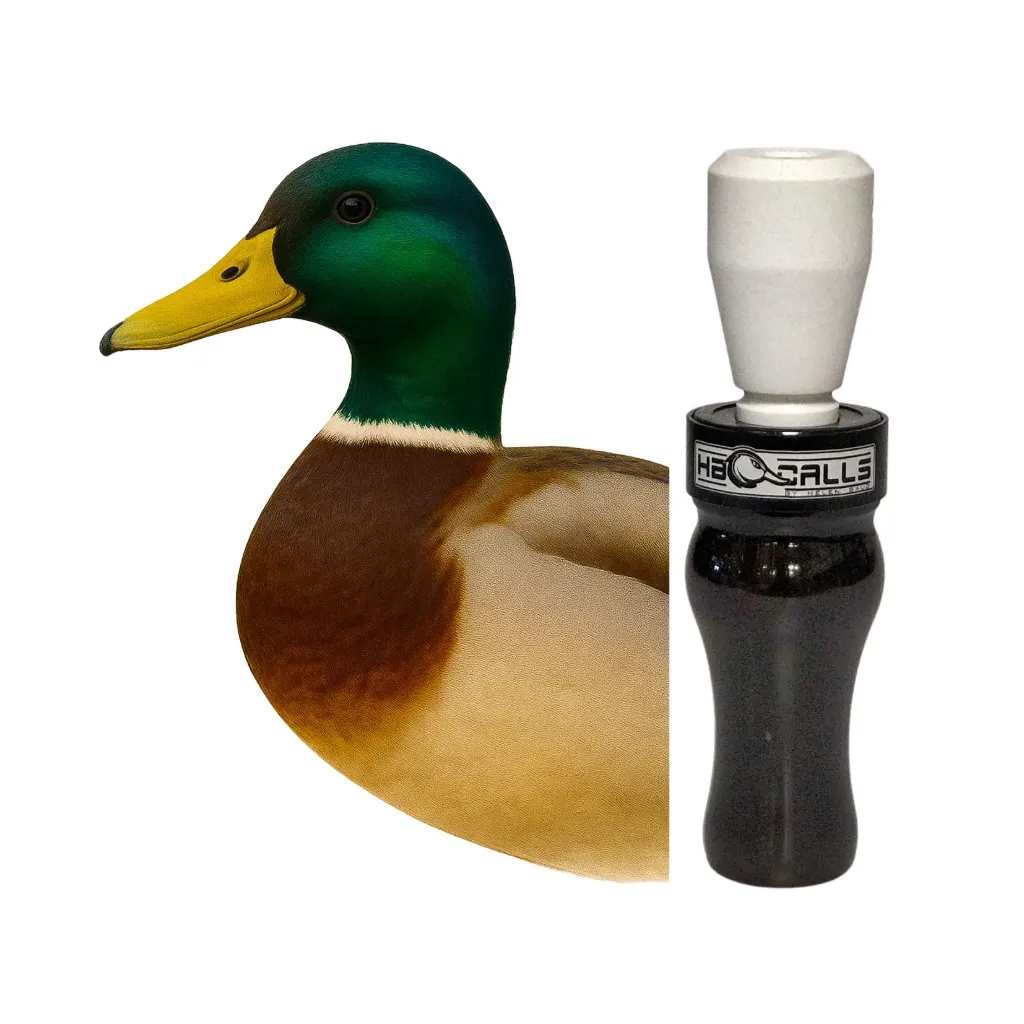
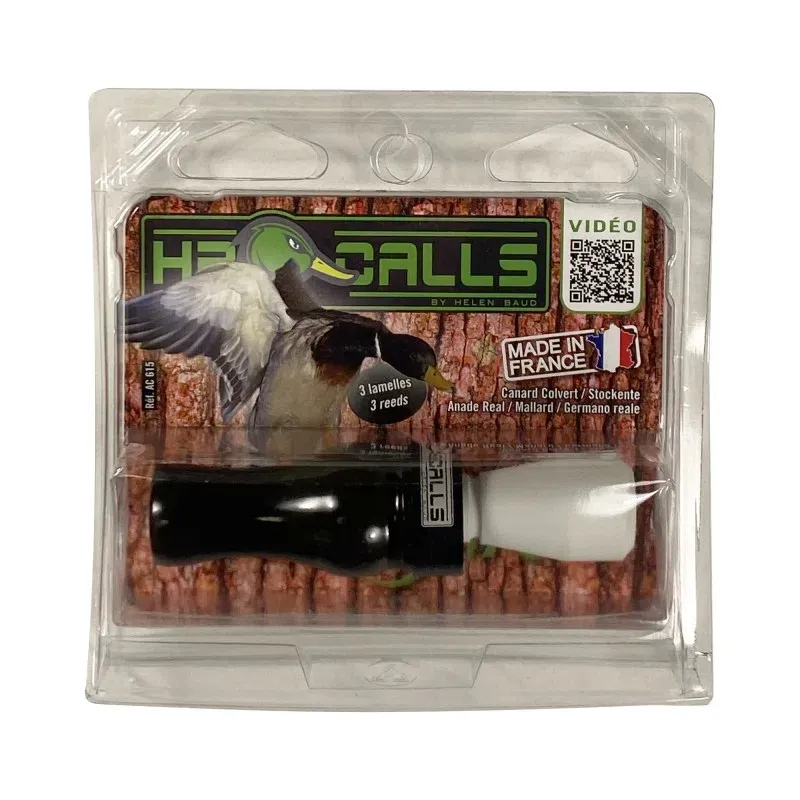
When conditions become difficult, the quality of the call often makes the difference. The Triple Reed Mallard Call by Hélen-Baud is developed to produce a full, powerful, and consistent sound, capable of carrying far while maintaining excellent fidelity to the natural calls of the mallard.
Its three-reed design facilitates the production of rich and deep sounds with good stability. Whether you are hunting pass shooting, over decoys, or in marshes, this call accompanies you with reliable sound reproduction.
Designed for waterfowl hunters
In the field, every call counts. This call allows you to easily vary the vocalizations according to the birds' reactions: welcoming calls, recall calls, or more insistent sequences.
Its quick handling and consistency make it a reliable tool for all your outings.
How to use this Mallard Duck Call?
1
Prepare your call
Before you start, check that the reeds are clean and free of moisture.
2
Master your breath
Blow gradually without forcing. The triple reed system facilitates the emission of a full and stable sound.
3
Vary the calls
Alternate short calls, series of recalls, and longer vocalizations to imitate natural behavior.
4
Adapt
Observe the reactions of the game and adjust the rhythm or intensity of your calls to remain credible.
The Mallard Duck Call in action
Nothing replaces a demonstration in the field. This video shows how to handle the call, the different possible adjustments, and the types of sounds it can produce.
Why use the triple reed mallard call
A powerful sound
The triple reed system produces a high sound volume, particularly useful when the birds are at a great distance or in strong wind.
Realistic sounds
The different vocal nuances allow for a faithful reproduction of the mallard's calls.
Excellent stability
The three reeds provide a consistent emission that facilitates the repetition of calls.
Easy to handle
Even with little experience, it allows you to quickly achieve convincing sounds.
Reliable construction
Hélen-Baud is known for offering robust calls designed to accompany hunters season after season.
Compact and practical
Its reduced size allows you to always have it within reach without cluttering your gear.

Valentin's opinion
A good call never replaces field observation, but it can clearly make a difference at the right moment. I appreciate this Hélen-Baud model for its stability and power.
The triple reed system forgives small breath errors while allowing for credible calls. It is a reliable model for hunters looking for an effective call without complications.
FAQ - Frequently Asked Questions
Yes. Thanks to its triple reed design, this call is more forgiving than a single reed model. It makes it easier to achieve a stable and realistic sound, allowing beginner hunters to progress quickly while providing enough opportunities for experienced users.
The triple reed produces a more powerful, deeper, and more stable sound. It generally requires less precision in blowing than a single reed and allows for easy reproduction of the mallard's vocalizations, even when weather conditions are difficult.
Start with short series of calls to attract the birds' attention. Then observe their reaction before adjusting the rhythm and intensity. The goal is not to call continuously, but to replicate the natural behavior of mallards.
Yes. Its sound power and stability make it perfectly suited for waterfowl hunting, whether you practice it from a blind, a layout boat, in marshes, or during migration.
Yes. The acrylic body withstands moisture well. After each outing, it is simply recommended to clean and dry the call to preserve the quality of the reeds and maintain a consistent sound.
After use, remove any moisture and let the call dry before storing it. Regular maintenance helps maintain excellent sound quality and extends the lifespan of the reeds.
Yes. It allows you to reproduce different contact, recall, and attraction calls.
Yes, its compact size allows you to slip it into a pocket or hang it on a lanyard. The ideal is to store it in a dedicated pocket or use it with a call holder. This way, you keep it easily accessible while protecting the reeds from shocks and impurities.
The best call is the one you master. A triple reed model like the Hélen-Baud AC615 offers an excellent compromise between power, realism, and ease of use. Combined with good observation of bird behavior and appropriate use for hunting conditions, it allows you to reproduce credible and effective vocalizations.
What is the difference between a single, double, and triple reed call?
The number of reeds directly influences the sound of the call, its ease of use, and the type of vocalizations you can reproduce.
There is no "best" system in absolute terms: it all depends on your level, your habits, and the hunting conditions.
| Single reed | Double reed | Triple reed | |
|---|---|---|---|
| Ease of use | Technique | Easy | Very easy |
| Realism of vocalizations | Excellent | Very good | Very good |
Effective range | 300-400 m | 200-300 m | 100-200 m |
Sound | Deep and raspy | Balanced and versatile | Deep and reassuring |
| Control of nuances | Excellent | Very good | Good |
| Tolerance for blowing errors | Low | Good | Excellent |
| Windy conditions | Correct | Very good | Excellent |
Hunter profile | Expert / Advanced | Beginner / Intermediate | Beginner |
Ideal environment | Open areas / large spaces | Versatile | Closed environments |
If you are a beginner or looking for a reliable, powerful, and easy-to-use call, the Triple Lamelle Hélen-Baud is an excellent choice. It allows you to easily produce realistic calls and accompanies you in most situations encountered while hunting mallards.
You might also be interested in these items
Discover our alternative or complementary products for hunting
&c4=o-color-4&c5=o-color-5)
Easy returns
Quick refunds or easy exchanges, with peace of mind.&c2=rgba(0,0,0,.5)&c4=o-color-4&c5=o-color-5)
Guaranteed shipping
Enjoy fast and secure delivery on all orders with no hidden fees.&c4=o-color-4&c5=o-color-5)
Secure payment
Your information is protected with secure payment and reliable payment methods.&c2=rgba(0,0,0,.5)&c4=o-color-4&c5=o-color-5)