The tracker
The one who moves forward
In a drive, while some wait at their posts, you are in the action.
You move through the brambles, ferns, and underbrush. You follow the dogs, listen to their voices, and read the signs that the terrain gives you.
But you do not work alone. Your dog moves ahead of you, sometimes out of sight, in places where the vegetation closes behind him.
Following him, protecting him, and staying in contact with your team: that is what matters when you are on the front line.
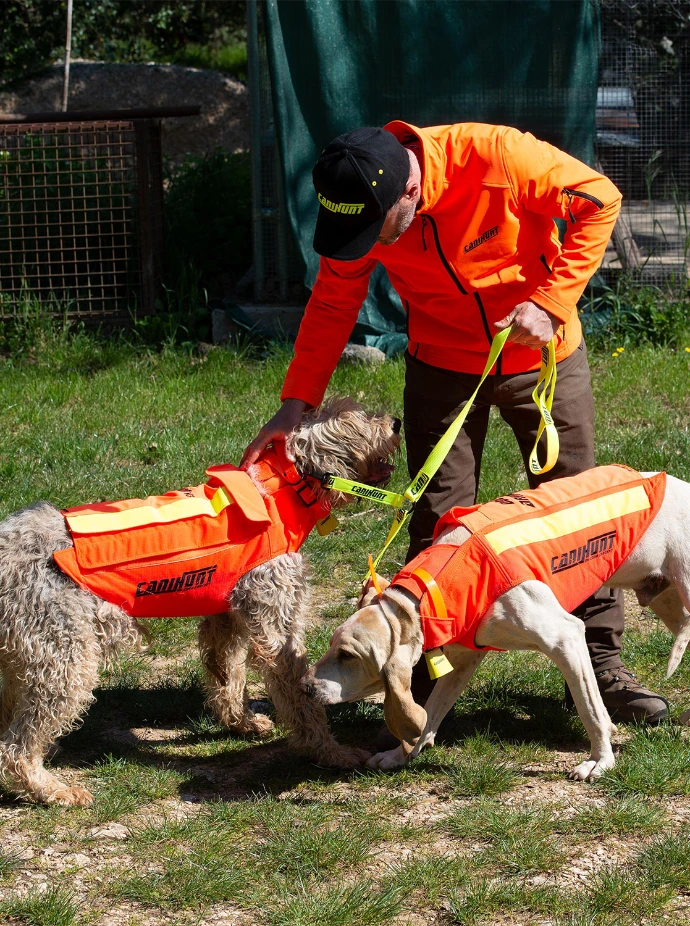
How do you recognize the tracker?
- He deliberately chooses the path where there is no path.
- The brambles? He knows them.
The mud? Also. - He hunts with his dog, not beside him. He knows his habits and recognizes his reactions.
- He likes it when things move. He progresses, adapts to the terrain, and keeps pace with the drive.
Why does he love tracking?
Because he is at the heart of the action.
He discovers the terrain, follows the dogs, and stays attentive to every clue. And when the sounder of wild boars starts, he shouts until he has no breath left.
But what he prefers is this special relationship with his dog. Working together, trusting him, and finding him after a long chase makes each day unique.
MOVE FLUSH ANNOUNCE
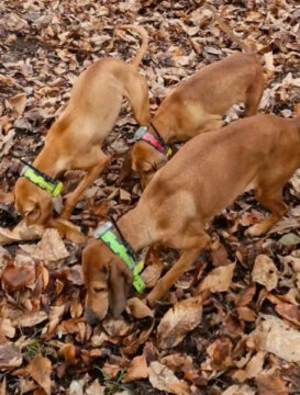
In the TRACKING,
You also have to...
Stay in contact
with your dogs
Progress through
the vegetation
Announce the game
on the radio
Be visible
and protected
When you enter
the thick stuff,
your gear
must follow.
The essentials for the tracker and his dog
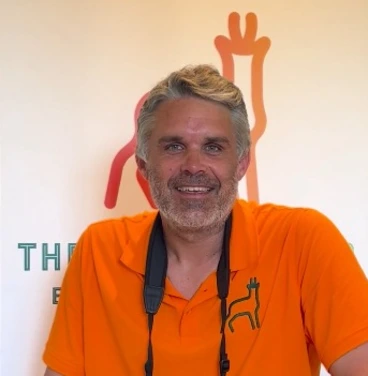
Valentin's opinion
In tracking, my dog is not an accessory. He’s my hunting companion. So I don’t choose the GPS or the vest lightly. When he goes into the brambles or takes a path, I want to be able to follow him and know where he is.
And the radio is the same. In a drive, you need to be able to talk to each other, keep up to date with what’s happening.
You really see the importance of the gear when you’re in the woods. So it’s best to choose good stuff from the start.
FAQ - Frequently Asked Questions
The equipment depends on the terrain, the type of tracking, and each person's habits. A radio, equipment suited to the terrain, and practical accessories make a good base. It is also necessary to provide the equipment needed for locating and protecting the dog.
A suitable vest can help protect the dog from certain risks related to vegetation and encounters with large game. The choice should take into account its morphology, breed, mobility, and hunting conditions.
A GPS allows you to locate your dog and track its movements when it is at a distance or disappears into the vegetation. The choice of system depends particularly on your dog, your terrain, and your tracking needs.
The radio allows you to communicate with other trackers and posted hunters, transmit useful information, and stay in contact with the team during the drive.
A transport solution suited to the size of the dog and the vehicle allows you to reserve a dedicated space for it during travel. Make sure the crate is properly installed, that the dog has sufficient ventilation, and that the transport conditions are suitable for the duration of the trip.
According to practice, you can prepare a collar, a tracking system, a suitable protective vest, a leash or a long line, and the necessary accessories for its transport. The goal is to prepare your dog for the conditions of the outing without unnecessarily multiplying the equipment.
Our latest content
Discover the new things in our company!
Also read on The HUNTER's BLOG
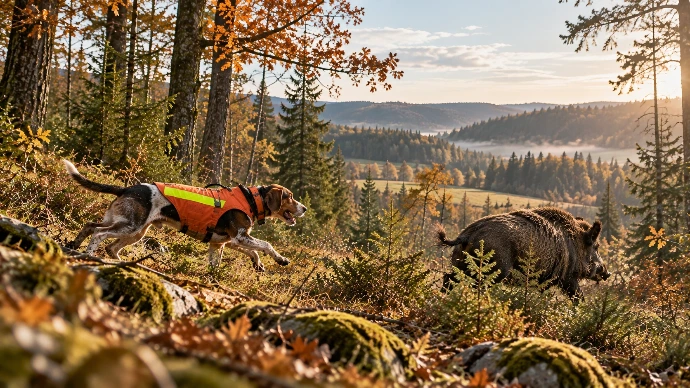
Aujeszky's disease: what risk for your hunting dog in Belgium?
The virus circulates among wild boars and can be fatal for the dog. Symptoms, risky situations, prevention, and veterinary advice: here’s what you need to know.
Read the article on this disease on the hunter's blog
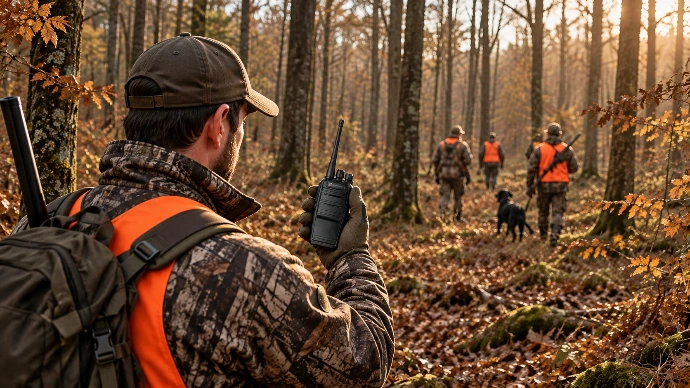
Hunting radio in Belgium: 7 criteria that really matter in the field
Range, power, battery life, IBPT license… A good hunting radio is not chosen based on a technical sheet. Here’s what really matters...
Read the article about the radio on the hunter's blog
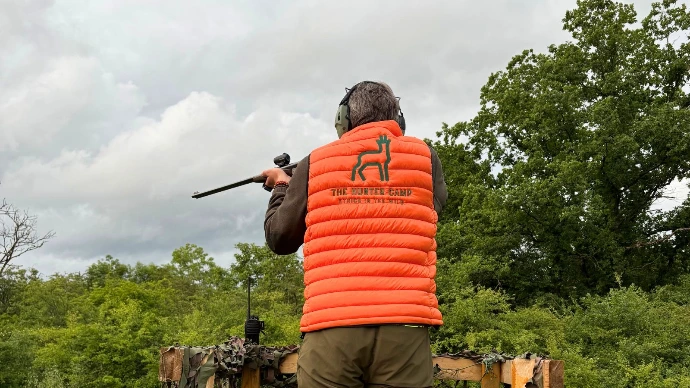
Why protect your ears from the very first outings?
Here’s why more and more young hunters choose to protect their hearing from their first season...
Read the article on the hunter's blog